

Kevin Swanson was homeschooled himself in the 1960s and 70s, long before it was fashionable or even widely legal in the United States. After graduating, he went on to serve as student body president of a large west-coast university, then moved into leadership roles in corporate management, church ministry, and non-profits.
He and his wife have five children, all of whom they homeschooled.
He founded Generations, a Christian ministry dedicated to "strengthening families through biblical education, discipleship, and cultural commentary".
Kevin has lectured in many countries, and has written about 30 books.
Basically, he lives and breathes homeschooling with a Christian twist.
The big picture 📚
Homeschooling is simply the practice of parents taking direct responsibility for their children's education, teaching them at home rather than sending them to a government or private school.
I went to both.
If parents don't outsource their kids' health to the state, then why would they outsource their kids' education to the state?
To be fair, I think there are valid reasons — like needing a place to leave the kids while the parents work, and the perception that homeschooling is very taxing on home and married life.
Instead of handing a child over to a government institution for six or seven hours a day, the parent becomes the primary teacher, choosing the curriculum, setting the pace, and shaping the entire learning environment around that specific child's needs, abilities, and values.
Families do it for all sorts of reasons, including:
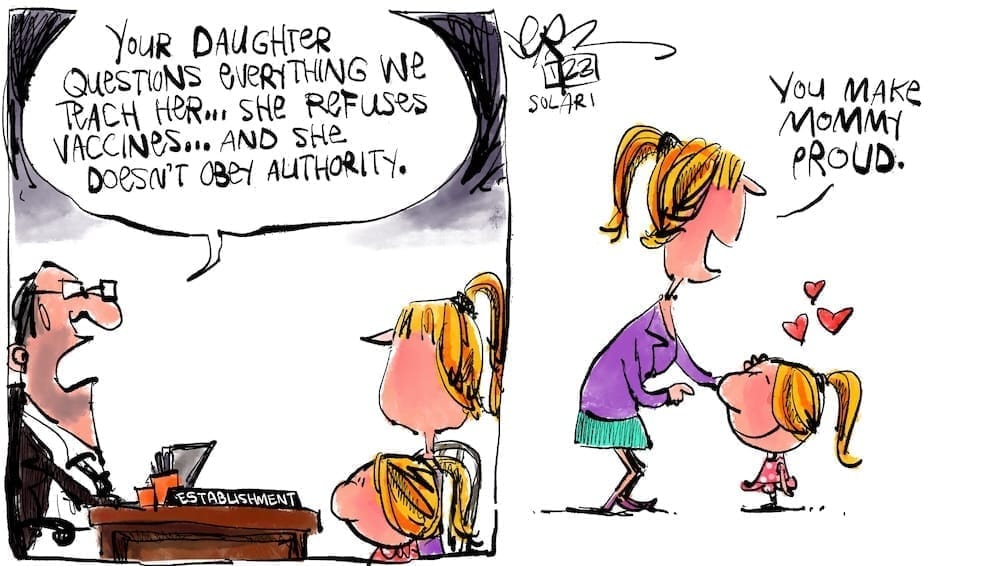
- lack of trust in the establishment,
- safety,
- cultural influence (such as LGBTQ and climate change nonsense), or
- a desire to ground their children's education in a particular religious or moral framework.
The method itself varies widely, from structured, textbook-based programmes that mirror a traditional school day, to relaxed "unschooling" approaches where children learn through real-life experiences and natural curiosity.
What ties it all together is the core conviction, increasingly backed by academic research, that a parent who knows and loves their child is almost always better placed to educate them than a stranger in a classroom managing thirty other children at the same time.
In other words, the family sits front and centre.
Hard to argue against that.
Evidence supports homeschooling
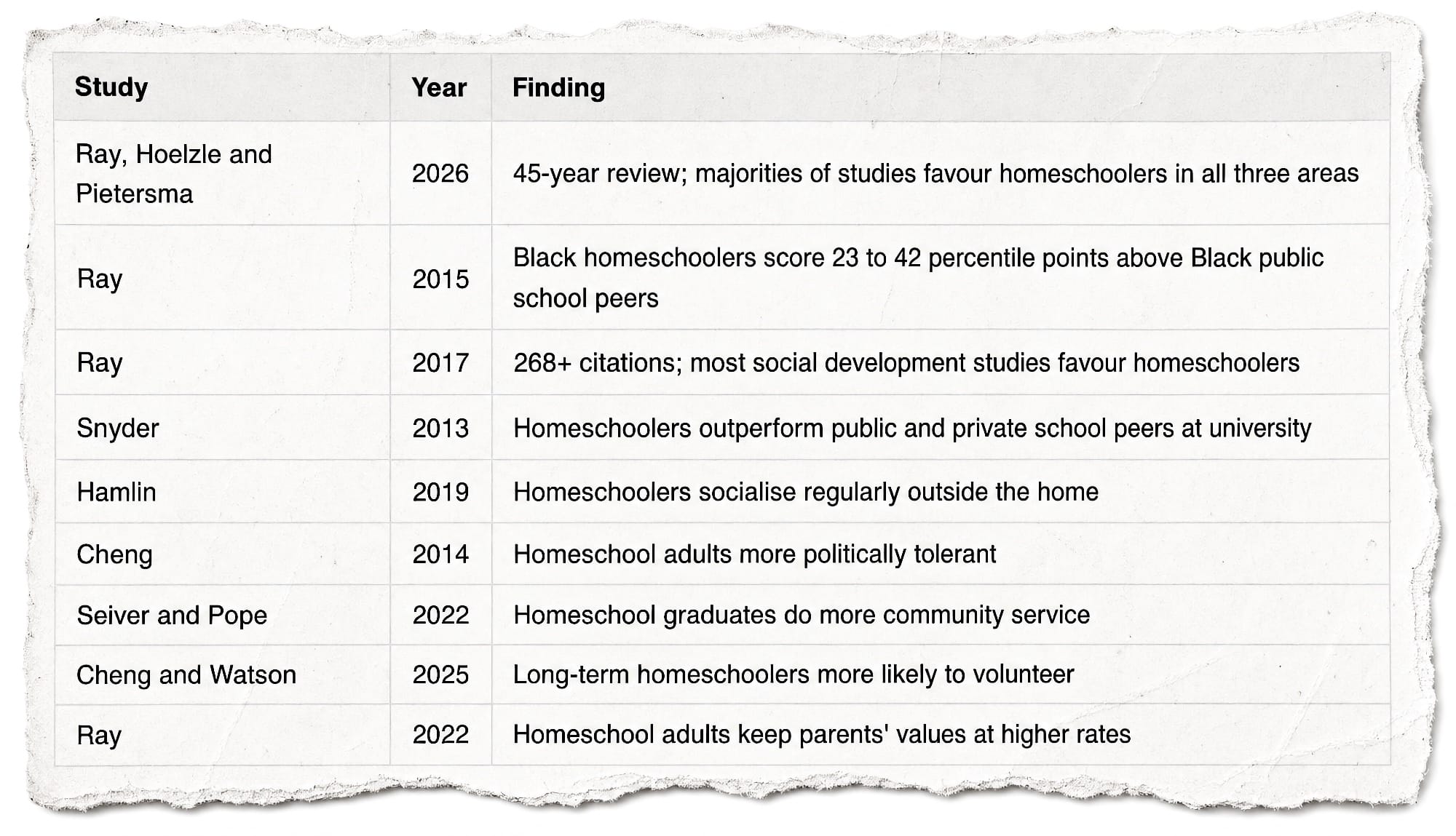
A recent mega-study, which studied 45 years of homeschooling studies (🤣), reached some fascinating conclusions, which I asked AI to put into a table for easy reading:
Homeschooling is no longer a fringe movement.
Although, as Kevin pointed out in my conversation with him, it was never a fringe movement until the last century or so — it's been the default for thousands of years.

It is one of the fastest-growing education trends in the Western world, and the data increasingly supports what people like Kevin have argued for decades.
- There were approximately 3.408 million homeschool students in the US in 2024-2025, representing around 6.26% of the school-age population. This is up from 2.5 million in 2019. (Cheers, Covid! 🥂)
- Homeschooling grew at an average rate of 5.4% in 2024-2025, nearly triple the pre-pandemic growth rate of around 2%.
- 80% of US states that report data showed an increase in homeschooling in 2024-2025.
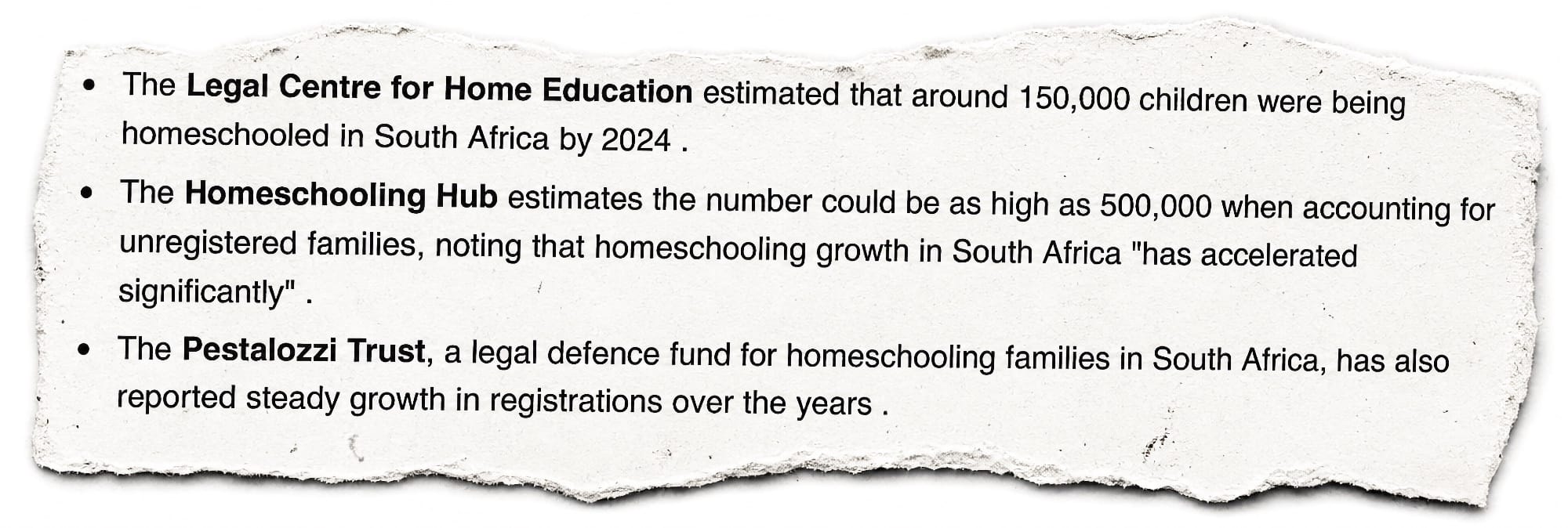
I don't know the data for my country, South Africa, but anecdotally, homeschooling is popular and growing.
Take a listen to Kevin
If you want to listen rather than watch, please subscribe to Jerm Warfare on whatever podcast app you prefer. On Apple, you can upgrade to a cheap paid subscription to remove ads. Better yet, you can listen on my premium podcast without ads and get access to bonus content.
Don't you just love his passion?
I do.


