

You know that phrase a knight in shining armour?
Well, it's not true.
Sorry, ladies. 💔
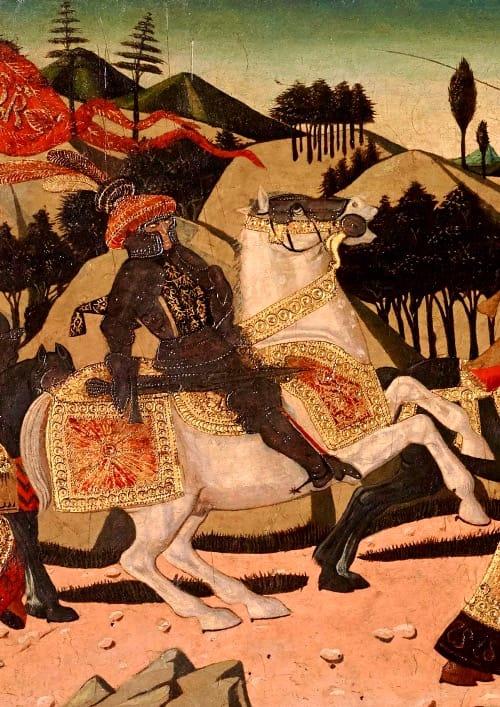
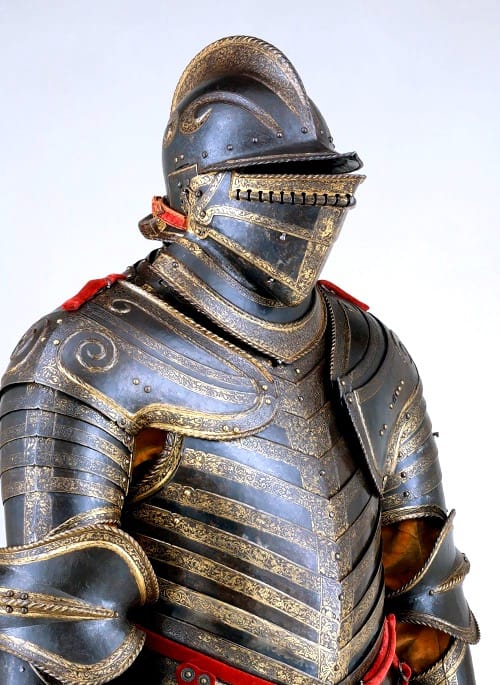
In short, the knight in shining armour image is a product of storytelling rather than reality. The shiny appearance comes from the misconception that armour was always made of polished steel. As it turns out, armour was made from a variety of materials including leather, chain mail, and plate armour.
There is no greater glory than the honor of knighthood.
— Sir Thomas Malory
And, well, the primary purpose of armour was to protect, not to look pretty and sparkly.
Polished armour would quickly become scratched and dull in battle. Plus, keeping armour shiny would have been extremely labour-intensive and expensive.
Our image of the knight in shining armour has been heavily influenced by Hollywood and books.
That's the truth, argues Chris.
Chris Dobson
Chris is a Master Armourer who became an Art Historian, and he refers to himself as a renaissance dissident.


His passion for art and history was ignited by his father, a WWII code-breaker. This fascination led him to explore museums, castles, and cathedrals from a young age, eventually studying Hieroglyphic, Latin, and Italian. In 1985, he established a studio specialising in the reconstruction and restoration of armour and edged weapons from various historical periods.
His skill has earned him commissions from museums and opportunities to work as an armourer for film and stage productions, including Sir Ian McKellen's King Lear and Franco Zeffirelli's Hamlet.
The knight in shining armour never existed—his armour dulled with use, and his honour dulled faster.
— Hilary Mantel, novelist and historian
🎙️ Podcast episode
Chris discussed all of the above with me, including why Tartaria is an attempt to undermine Western culture.


