

When people label you a "conspiracy theorist", they are inadvertently doing the CIA's work by trying to suppress critical thinking. They don't realise that the CIA weaponised the phrase back in the 1960s. Honestly, being labelled that is just a compliment.
Throughout the pseudopandemic, the phrase "conspiracy theory" soared through the zeitgeist. Suddenly, anybody found questioning any official story was deemed a "conspiracy theorist" worthy of censorship and, in some instances, jail time. Many of my podcast episodes questioning the existence of COVID-19, for example, were censored and even reported to authorities for "misinformation".
Why?
Why is having an opinion deemed a threat?
The CIA is the world's most efficient distributor of disinformation.
— John Stockwell, former CIA Station Chief
The establishment (media plus government plus academia) told us not to do our own research because, well, you know, thinking critically means not being dependent on "the experts", and we can't have that. Trust the experts, and all that, right?
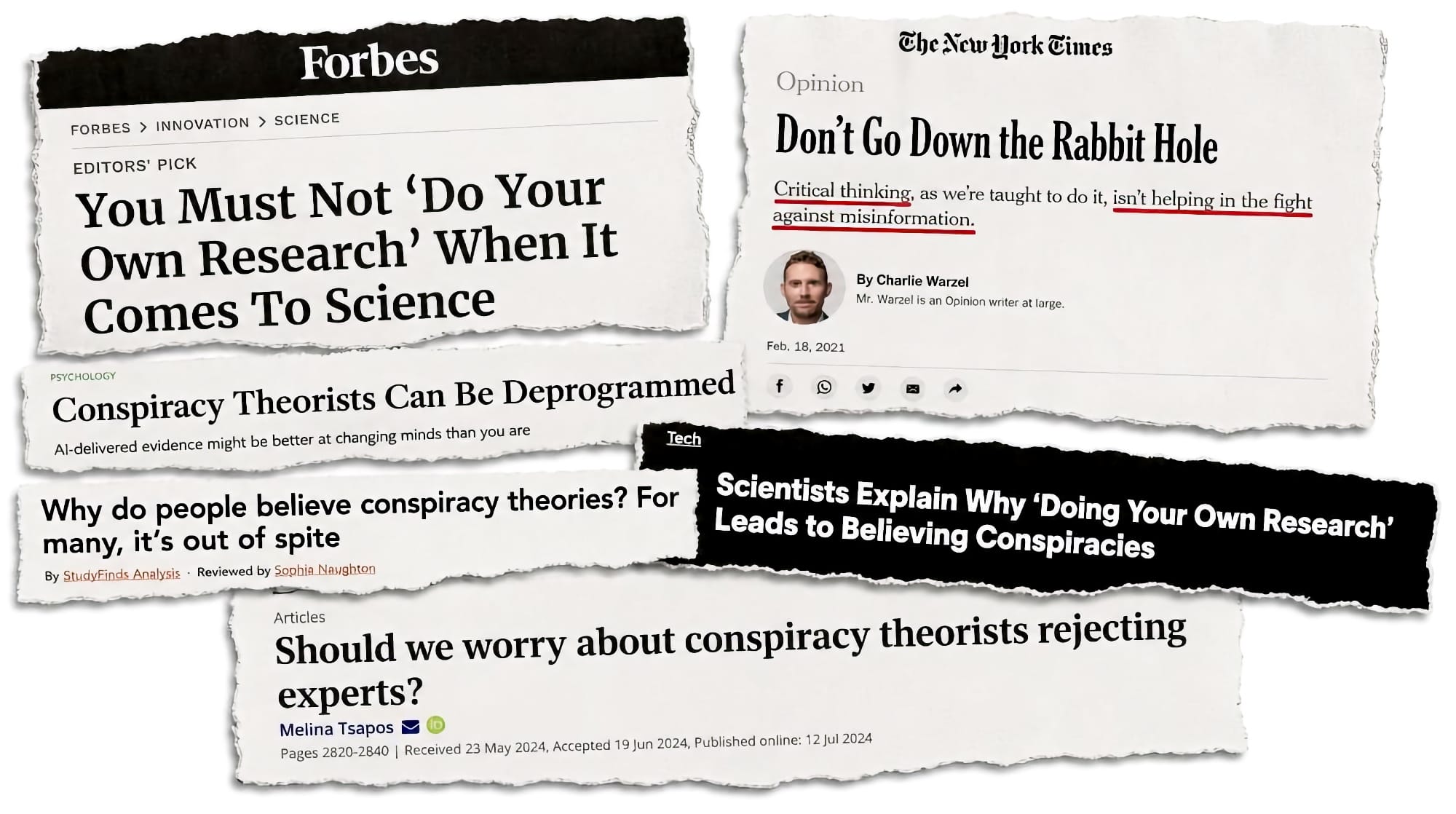
Quick history
The phrase "conspiracy theory" first appeared in the 19th century, referring to the study of conspiracies, often focusing on political intrigue and secret plots. Initially, it had a neutral or even positive connotation, highlighting the importance of investigating covert activities.
Or what was once fondly known as "journalism".
Then, in the 20th century, the phrase began to take on a negative tone, thanks to the CIA.
Warren Commission
Why does the phrase "conspiracy theory" unsettle so many people?
The answer is: propaganda.
Since the 1960s, propaganda has been used to discourage discussion or investigation into numerous events, from JFK's assassination to the Apollo Missions and, recently, Covid.
Following growing public doubt over the Warren Commission's conclusions on JFK's assassination, the CIA issued a comprehensive directive to its stations.
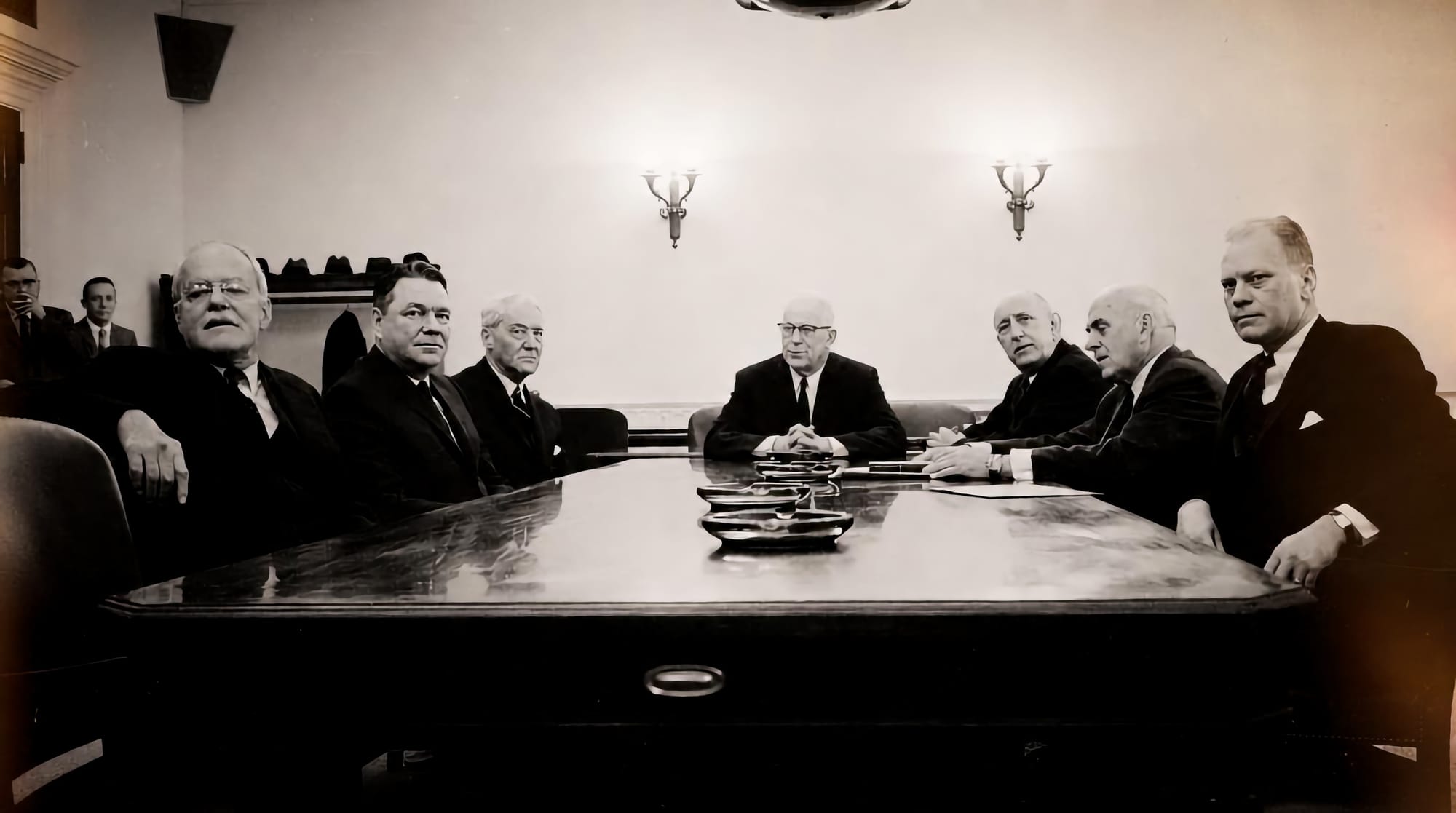
To be clear, the general public did not believe the official story that Lee Harvey Oswald killed JFK.
The Warren Commission, set up by President Lyndon B Johnson on 29 November 1963, was tasked with investigating the assassination of JFK on 22 November 1963. Titled Countering Criticism of the Warren Commission Report, this memo massively contributed to the use of "conspiracy theory" as a term to discredit those who question the government's secret operations and policies. Ironically, the Warren Commission's namesake, Chief Justice Earl Warren, likely knew about the cover-up.
In other words, the CIA did not want people questioning the assassination of JFK and wanted, instead, to control public discourse. JFK was furious with the CIA after the Bay of Pigs disaster in 1961, held CIA Director Allen Dulles personally responsible for deceiving him, and fired him shortly after.
And then, in a move that defies any reasonable logic, Dulles was appointed to the Warren Commission, the very body tasked with investigating JFK's assassination.
The man JFK fired for lying to him was put in charge of investigating his death.
You couldn't write fiction this absurd.
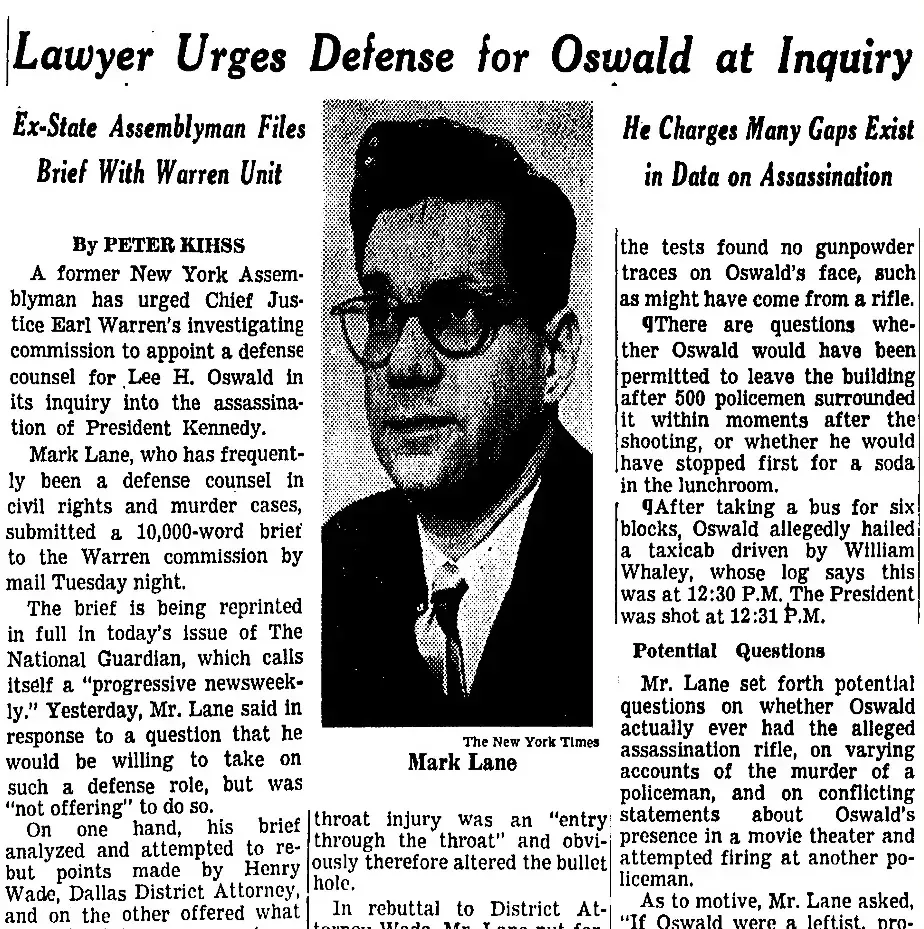
Even Lee Harvey Oswald's lawyer suspected foul play.
CIA directive
The directive, known as Document 1035-960, was first marked for FOIA (Freedom Of Information Access) review in September 1976, partly as a result of pressure from outlets including the New York Times, before being fully declassified and released in 1996 via the CIA Historical Review Programme.
It details a series of actions and techniques for "countering and discrediting the claims of the conspiracy theorists, so as to inhibit the circulation of such claims in other countries."
The memo was sent to "Chiefs, Certain Stations and Bases" worldwide, not just domestically. It recommended using "friendly elite contacts (especially politicians and editors)" to push back against critics, and suggested book reviews and feature articles as vehicles for countering sceptics. One example was to remind those contacts about the accuracy and soundness of the report and that "further speculative discussion only plays in to the hands of the [Communist] opposition."
Basically, if one challenged the government's story, then one was an evil commie.
And nobody wanted to be an evil commie.
Operation Mockingbird
This wasn't theoretical.
The CIA already had the media on its payroll.
In 1975, the Senate's Church Committee investigated CIA abuses and revealed that the agency had been secretly co-opting American journalists for decades. Two years later, Carl Bernstein (yes, the Watergate guy) published a 25,000-word cover story in Rolling Stone titled "The CIA and the Media". He reported that more than 400 American press members had secretly carried out assignments for the CIA, including New York Times publisher Arthur Hays Sulzberger, columnist Stewart Alsop, and people at Time magazine.
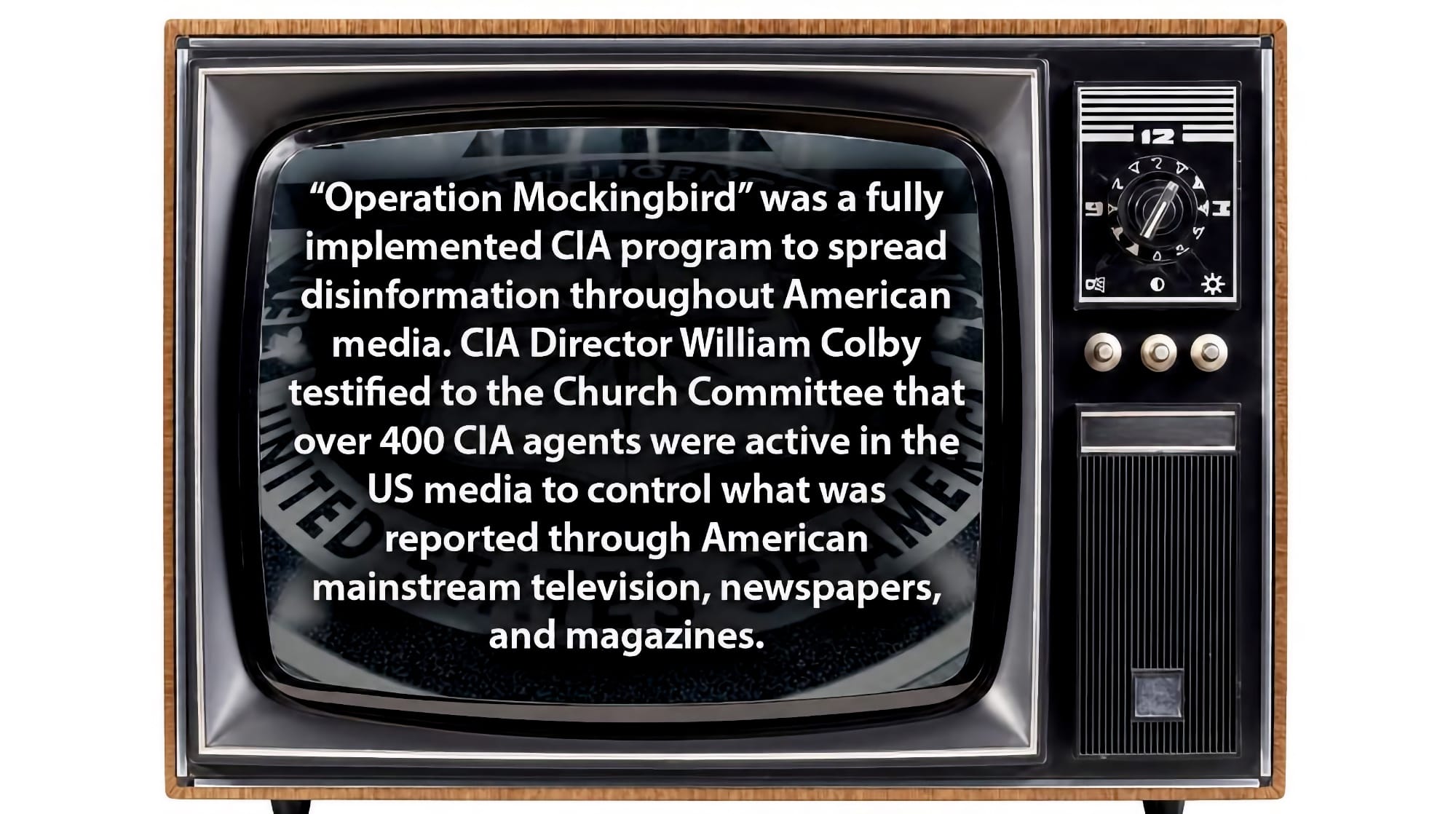
This was the implementation of Operation Mockingbird, and the labelling of "conspiracy theorists" was never just about name-calling; it was backed by a media machine the CIA had spent years building.
It never ended
If you think the CIA stopped at labelling people, think again.
In 2008, a Harvard and University of Chicago law professor named Cass Sunstein, who was later appointed by Obama to head the Office of Information and Regulatory Affairs, co-authored a paper with Adrian Vermeule titled "Conspiracy Theories".
In it, they argued that people who hold conspiracy theories suffer from a "crippled epistemology" and proposed that government should engage in "cognitive infiltration of the groups that produce conspiracy theories", using anonymous government agents to undermine them from within.
Let that sink in.
A future Obama administration official openly proposed that the government should secretly infiltrate groups of citizens who question official narratives. The CIA's 1967 strategy didn't fade away; it became official academic and governmental policy.
9/11 and Building 7
Since it's such a big talking point, I'll just quickly note Building 7, which was not hit by a plane, yet it collapsed a few hours later because of "office fires", falling symmetrically into its own footprint at free-fall acceleration for just over six seconds.
No steel-framed skyscraper in history has ever collapsed from fire alone, before or since. The establishment hacks counter that the building was damaged, and yes, it was, but damage does not cause a building to fall straight down, at nearly free-fall speed, into its own footprint.
Here's the BBC announcing its collapse almost 25 minutes too early:
And no, the Plasco Building collapse in Tehran, which the mainstream pundits bring up, is also questionable.
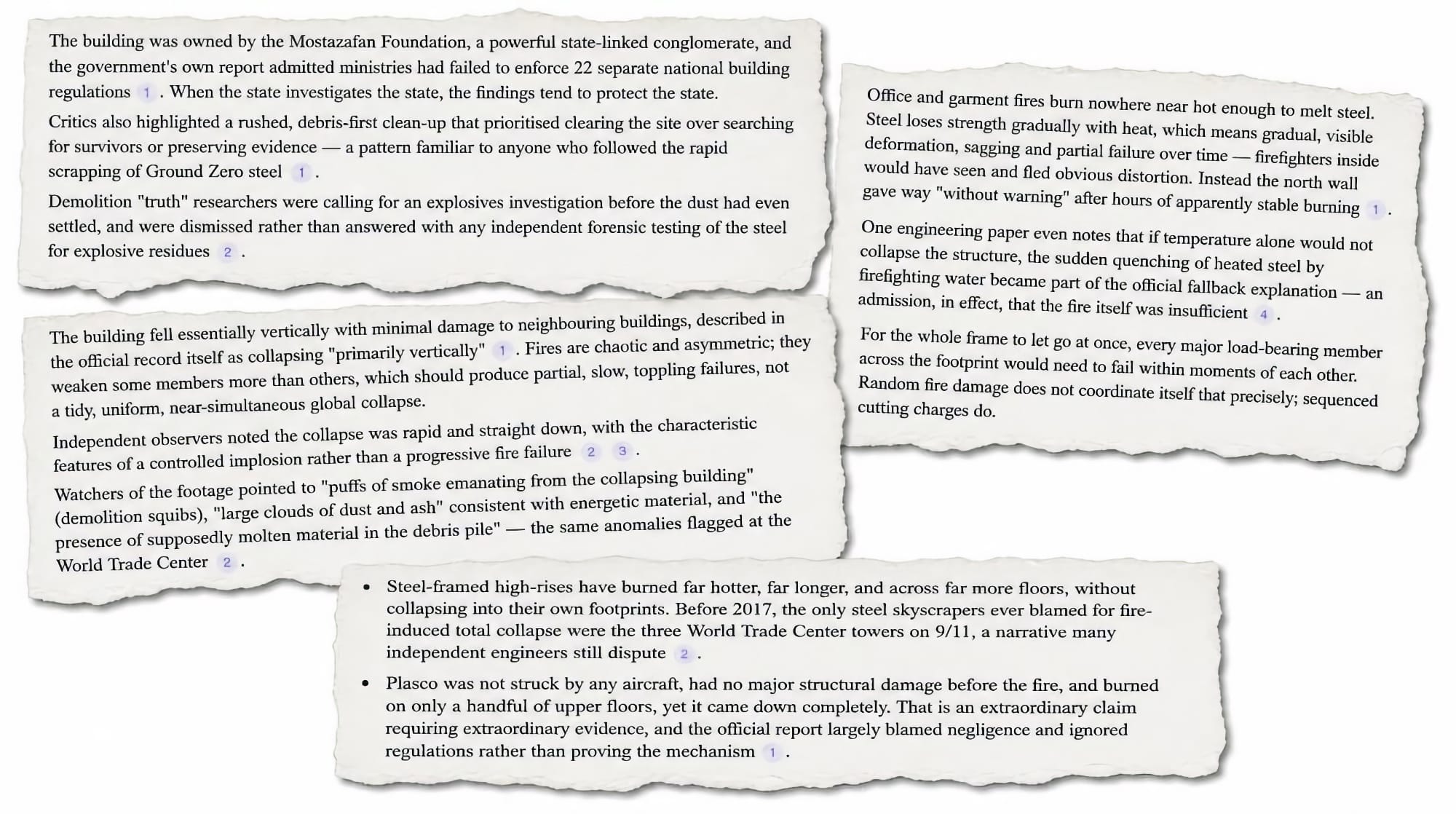
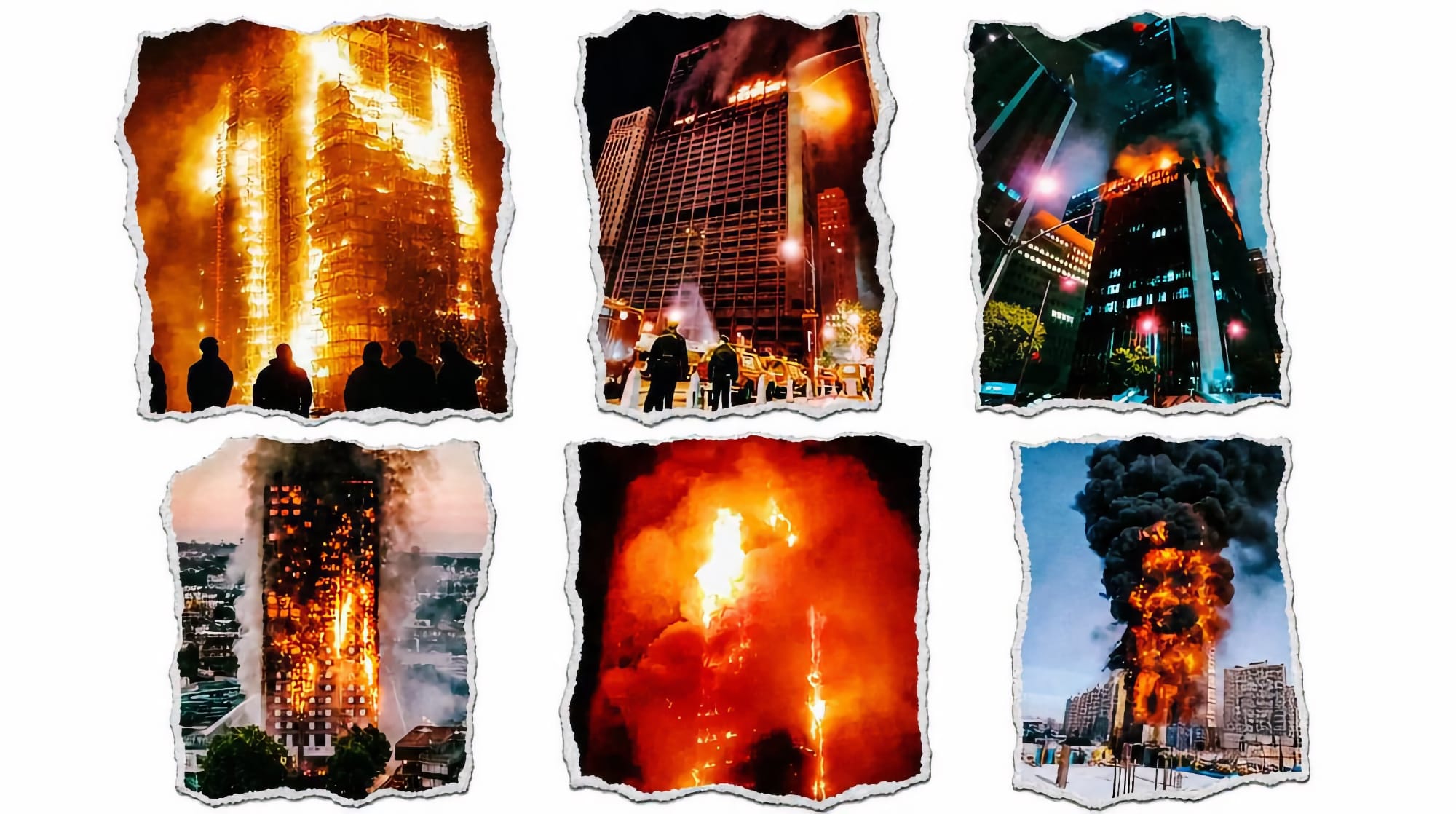
On 19 January 2017, the 17-storey Plasco Building in Tehran burned for roughly three and a half hours before its north wall "collapsed without warning", followed moments later by the collapse of the entire structure, killing 20 people, most of them firefighters. The official story blames fire alone.
A four-year study by the University of Alaska Fairbanks, led by civil engineering professor Dr Leroy Hulsey, concluded that fire did not cause the collapse of Building 7, and that the collapse required the near-simultaneous failure of every column in the building.
Over 3,000 architects and engineers have signed a petition calling for a new, independent investigation into the destruction of all the buildings that fell.
These are not cranks in tinfoil hats; they are licensed professionals who build skyscrapers for a living. And yet, anybody who raised (or raises) these points was (and still is) dismissed as a "conspiracy theorist", because that's easier than addressing the evidence.
The Covid psyop
The same labelling tactic was used relentlessly during the Covid era.
- The lab leak theory was called a conspiracy theory, until US intelligence agencies decided it was credible.
- Vaccine side effects were censored as "misinformation", until regulators quietly acknowledged them.
- Natural immunity was dismissed as fringe nonsense, until health authorities admitted it was real.
- Ivermectin was ridiculed as "horse paste", despite genuine scientific debate about its efficacy.
In every case, the label was used not to engage with evidence, but to shut down the conversation before it could start.
Same playbook, different decade.
It's a compliment
The phrase "conspiracy theorist" is now often used pejoratively.
When people use it to shut down conversation, they inadvertently play into the hands of the CIA.
The truth is, being labelled a "conspiracy theorist" is a compliment because it means you're thinking critically for yourself.
Before he got booted from FOX, Tucker Carlson did a segment on how the CIA was involved in killing JFK. It was something that no other mainstream news outlet had the balls to do.
When the phrase "conspiracy theorist" gets thrown around, the CIA smiles.
I want to splinter the CIA into a thousand pieces and scatter it to the winds.
— JFK, allegedly
And then he was assassinated.
And then anyone rejecting the official story was labelled a "conspiracy theorist".
So the next time somebody calls you one, here's how to respond. Ask them if they know where the phrase came from. Most don't. Ask them which specific claim they disagree with, forcing them to engage with evidence rather than labels. And remind them that plenty of things once dismissed as "conspiracy theories" later proved true:
- MKULTRA: the CIA drugged unwitting Americans with LSD for years, destroyed minds, and conducted illegal mind-control experiments. When it was exposed, CIA Director Richard Helms ordered the files destroyed. They missed some.
- COINTELPRO: the FBI illegally surveilled, infiltrated, and tried to destroy civil rights groups, anti-war activists, and feminist organisations. They sent blackmail letters to Martin Luther King Jr telling him to kill himself.
- Operation Northwoods: in 1962, the Joint Chiefs of Staff signed off on a plan to stage terrorist attacks on American soil, blow up a US ship, and hijack planes, all to blame Cuba and justify a war. JFK killed it.
- The Gulf of Tonkin incident: the attack that was used to drag America into the Vietnam War never happened. The NSA declassified documents confirming it was fabricated. 58,000 Americans died for a lie.
- Operation Mockingbird: the CIA had over 400 journalists on the payroll, shaping what you read in the New York Times, Time, and CBS News. The "free press" was never free.
- The Tuskegee syphilis experiment: for 40 years, the US government deliberately left nearly 400 Black men untreated for syphilis, just to see what would happen. They watched them die, go blind, and go mad, while telling the men they were receiving "special government healthcare".
- NSA mass surveillance: the government was hoovering up every phone call, email, and text message of every American, and when Edward Snowden proved it, the same media that called it a conspiracy theory suddenly had to admit it was true all along.
- Project Paperclip: after World War II, the US government secretly brought over 1,600 Nazi scientists into America, gave them new identities, and put them to work for NASA, the CIA, and the military.
And that's just what they've declassified. The really good stuff is still locked away.
Search for truth and ignore the labels. The label isn't an argument.
It's a confession that they've run out of one.


