

Jack Miller has been at this for 19 years.
Long enough to watch the idea of Cape independence travel from a Facebook group to a public talking point that makes politicians in Pretoria uncomfortable.

The Western Cape is governed from 1,500 km away by people it did not vote for, which makes no sense. What makes more sense is if the government is more localised.
What CAPEXIT is
CAPEXIT (all uppercase) is the everyday name for the Cape Independence Party.
It is a Western Cape party with one job: to win an independence referendum.
Founded in 2007 as the Cape Party, it adopted the CAPEXIT name in 2016 and has run on a template similar to Brexit.
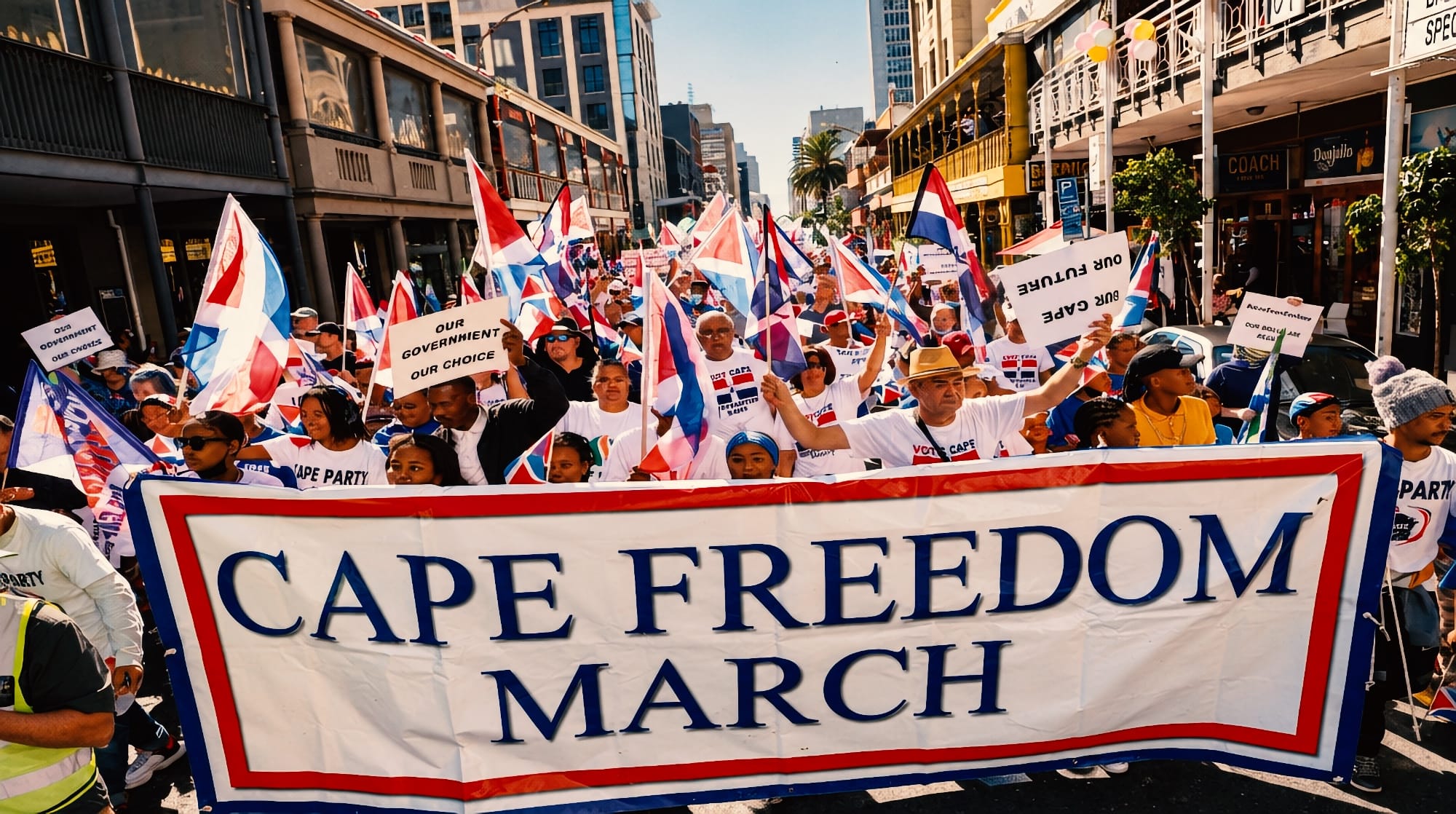
It contests only the Western Cape and it does not need to win it.
Sure, winning is first prize, but it just needs a few seats to begin making a difference.
With two seats in government it has already dragged the national conversation sideways. Jack was carried out of a council chamber for saying out loud that Cape families are pushed down the housing list behind internal migrants.
Shocking!
— Cape Independence Party (@capexitparty) May 28, 2025
The DA-run City of Cape Town has just joined forces with the EFF and ANC to throw Cape Independence Party leader, Jack Miller out of Council.
Councillor Miller was busy giving a speech about an issue in Cape Town in which low cost housing was being built.
He told the… pic.twitter.com/VhxJLHLZRI
That was treated as heresy at the time. It isn't now. #GoJackMyMan
Jack calls government a "cancer" on society and thinks you should want as little of it as possible, as close to home as possible.
His model is the city state, or better, the Swiss canton: 26 units that mostly run themselves, each able to veto its own taxes and protect its own language, held together by choice rather than force.
Livestream 🎥
Here is my livestream with Jack, recorded in Stellenbosch this morning.
The audio version is available on most podcast apps, including Apple Podcasts and Spotify.
 Jerm

Please subscribe to Jerm Warfare on whatever app you use. Become a Premium subscriber if you don't want ads.
Secession is anti-globalist
Globalism is a project of consolidation. Secession is the undo button.
Eighty years of architecture have pushed in one direction, through the UN, the EU, the WHO, the WEF and the WTO. Each layer adds distance between you and a decision. The further away the decision maker, the more they get away with and the harder they are to remove.
That is not a bug.
A government you cannot reach is a government you cannot hold. Secession pulls the levers back down to street level, which is exactly why globalists and secessionists are natural opponents. The Union of South Africa was itself a top down imperial construct from 1910, welded together to control the gold and the diamonds.
Then there are the incentives, which Jack explains in the conversation above.
Did you know?
In 1900 there were roughly 78 independent countries in the world.
Today the UN has 193 members. The count has more than doubled in a century and it has never gone backwards for long. The UN opened with 51 members in 1945 and has since admitted 142, the most recent being South Sudan in 2011.
The 1990s alone produced around 30 new countries: the Soviet Union broke into 15, Yugoslavia into seven, Czechoslovakia into two.
Norway left Sweden in 1905 on a vote of 368,208 to 184, which is 99.95%, one of the most lopsided referendums ever recorded.
Montenegro scraped through in 2006 on 55.5% against a 55% threshold.
Support decentralisation.
Support secession.
Support CAPEXIT.


