

Germar Rudolf, born in 1964 in Germany, is a chemist who graduated from Bonn University.
By his own account, he once accepted the standard history of the Auschwitz gas chambers without question. It was his scientific training, he says, that pushed him to look again — this time at the chemistry itself.
His work, known as the "Rudolf Report", is loosely based on the earlier Leuchter Report and examines the physical and chemical evidence around Zyklon B at Auschwitz-Birkenau. It has been revised and expanded several times since it first appeared in 1992.

Zyklon B is a delousing agent
Germar's starting point is simple; Zyklon B was designed as a delousing agent.
In his view it was, in his words, a "very poor gas for mass extermination".
Hydrogen cyanide (HCN) — the active ingredient in Zyklon B — was one of the most poisonous and fastest-diffusing gases used in disinfestation work. His argument is not that HCN is harmless; far from it. His argument is about scale, residue, and the practicalities of using it on people in specific buildings.
 Jerm

What is Prussian Blue?
Germar's most-discussed observation concerns the walls of the camp buildings.
During his on-site examinations, he says every delousing facility he inspected — at Auschwitz, Birkenau, Stutthof, and Majdanek — had one thing in common: walls permeated with Prussian Blue.
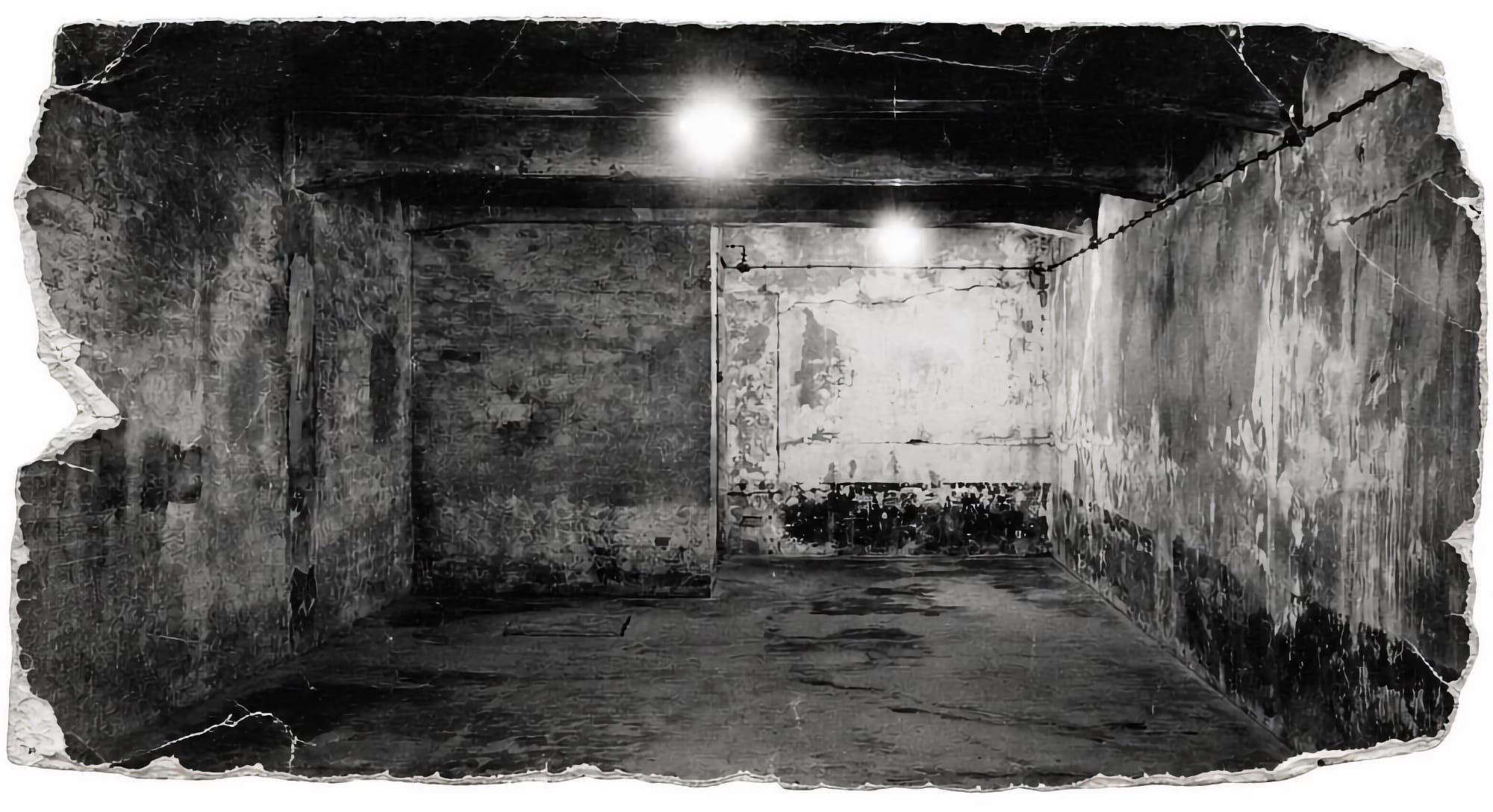
Prussian Blue is an iron-cyanide compound; it forms when hydrogen cyanide meets iron in damp, ferrous plaster and masonry.
Technical literature, he notes, has long recorded blue-stained walls after HCN fumigation in such conditions.
So, his comparison is:
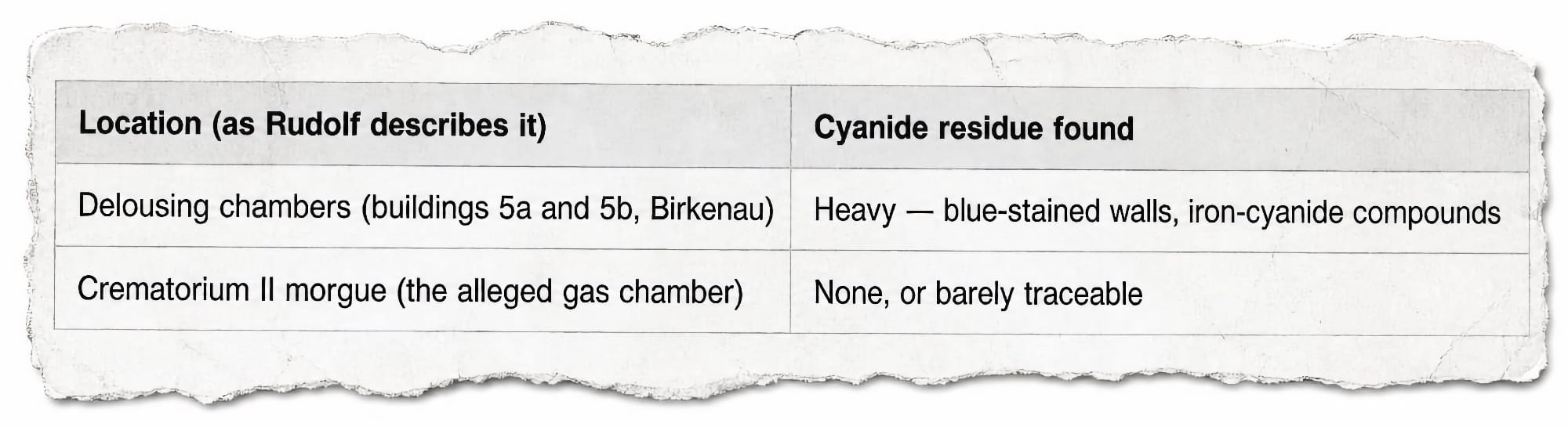
Samples for his analyses were collected in August 1990 from the ruins of crematorium II and other structures; delousing chambers served as his controls.
He used a hammer and chisel to reach unweathered fragments — plaster, mortar, and concrete from sheltered spots such as under collapsed pillars and ventilation openings.
Over the years 1991 to 1997, he ran chemical analyses on wall samples from Auschwitz I and Auschwitz-Birkenau, treating cyanide residue as an indicator of how intense, and how long, the exposure had been.
Engineering
Alongside the chemistry, Germar raises engineering questions — the rooms identified as homicidal gas chambers were, he points out, built as morgues; he argues their ventilation was not suited to clearing HCN quickly, and that their design fits delousing or corpse storage rather than what they are said to have been used for.
From all of this, he concludes that the chemical and physical evidence does not support the claim that Zyklon B was used to exterminate people in the Auschwitz gas chambers.
He acknowledges that Jews and others suffered, but what he contests is the notion of a "premeditated, planned and industrial extermination" carried out by means of gas chambers.
Discussion
Here's his conversation with me;
If liberty means anything at all, it means the right to tell people what they do not want to hear.
— George Orwell, British novelist


