

Today is a public holiday in South Africa.
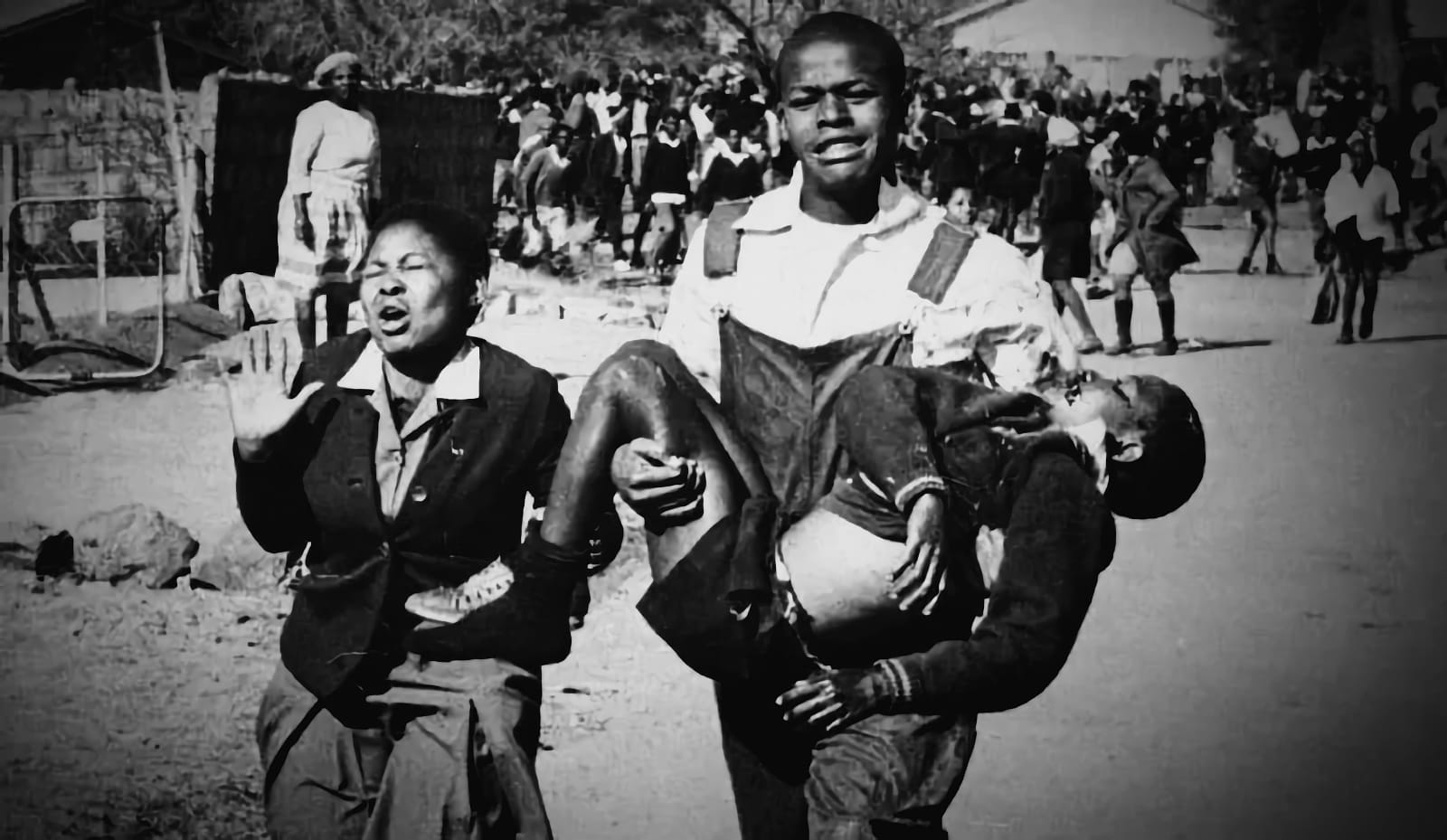
It's called Youth Day and it commemorates the uprising in Soweto on 16 June 1976.
The official story
In short, the apartheid government made a morally bankrupt decision to teach Black pupils in Afrikaans, which was never going to end well, since it was not their mother tongue. Naturally, there was pushback, which ended in street protests and lethal force by the government — another morally bankrupt decision.
After all, why use live ammunition on kids?
Well, that's exactly what they did, killing some, and the news went global.
The 16 June 1976 uprising had roots going back to 1953, when the apartheid government passed the Bantu Education Act — a deliberate policy to give black South Africans an inferior education designed to keep them as a permanent labour underclass. As Dr Verwoerd, the architect of apartheid, infamously put it: "Natives must be taught from an early age that equality with Europeans is not for them."
The immediate trigger came in 1974, when Deputy Minister Andries Treurnicht issued the Afrikaans Medium Decree, instructing all black schools to teach core subjects like Maths, Social Sciences, and Geography through Afrikaans — a language students and teachers neither spoke fluently nor wanted to use. Students saw Afrikaans as the language of their oppressors, and resistance began building immediately.
But there's another part to the story, deliberately suppressed and ignored, and that is the significant Soviet and Jewish influence behind the entire event.
🔍 The fuller version
The Soweto Uprising wasn't just an organic, spontaneous student revolt — it was the moment a genuine wave of Black anger was harvested by a Soviet-backed, Jewish-led communist machine.
The students' fury at forced Afrikaans education was real, but the apartheid government's own Cillie Commission found no evidence the march was externally organised, and student leader Tsietsi Mashiniji explicitly denied outside agitators.
If I were forced to learn in a language that isn't my mother tongue, I'd also have been angry. So, the pushback is understandable and, as Simon said on my podcast, the apartheid government utterly lost the moral high ground here.
What mattered was what happened after: thousands of radicalised young people fled South Africa straight into the arms of Umkhonto we Sizwe (MK), the ANC's armed wing — whose operational backbone was the South African Communist Party (SACP), led overwhelmingly by Jews.
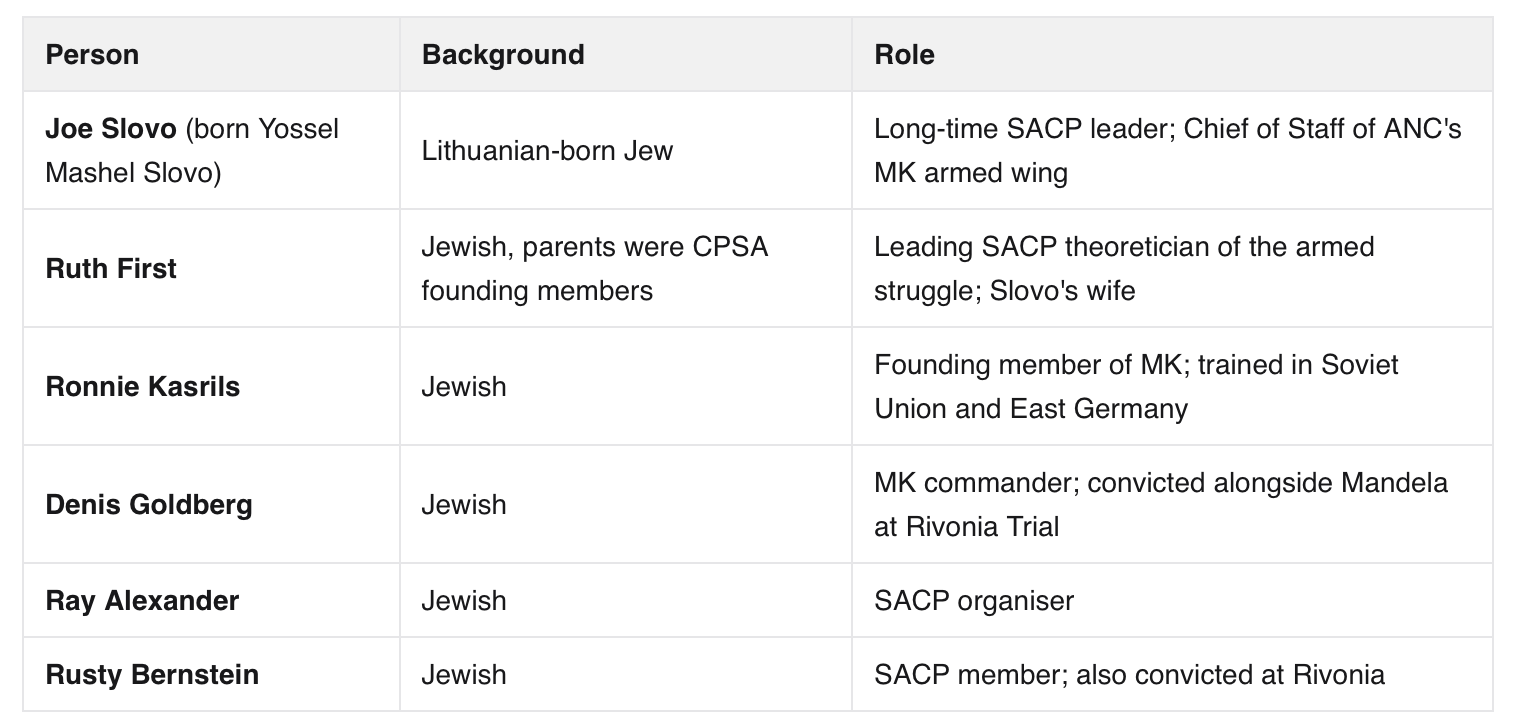
Jewish activists were overrepresented among White anti-apartheid figures by roughly 2,500% — immigrants who brought socialist radicalism from the Pale of Settlement (the restricted zone in the Russian Empire where Jews were forced to live, circa 1791–1917) and then built the SACP into the engine of the armed struggle.
That engine was funded, armed, and trained by the Soviet Union — not out of goodwill, but for:
- chromium, platinum, and manganese that the Western military depended on,
- control of the vital Cape sea route (the shipping lane around the southern tip of Africa), and
- Cold War encirclement of a key Western ally.
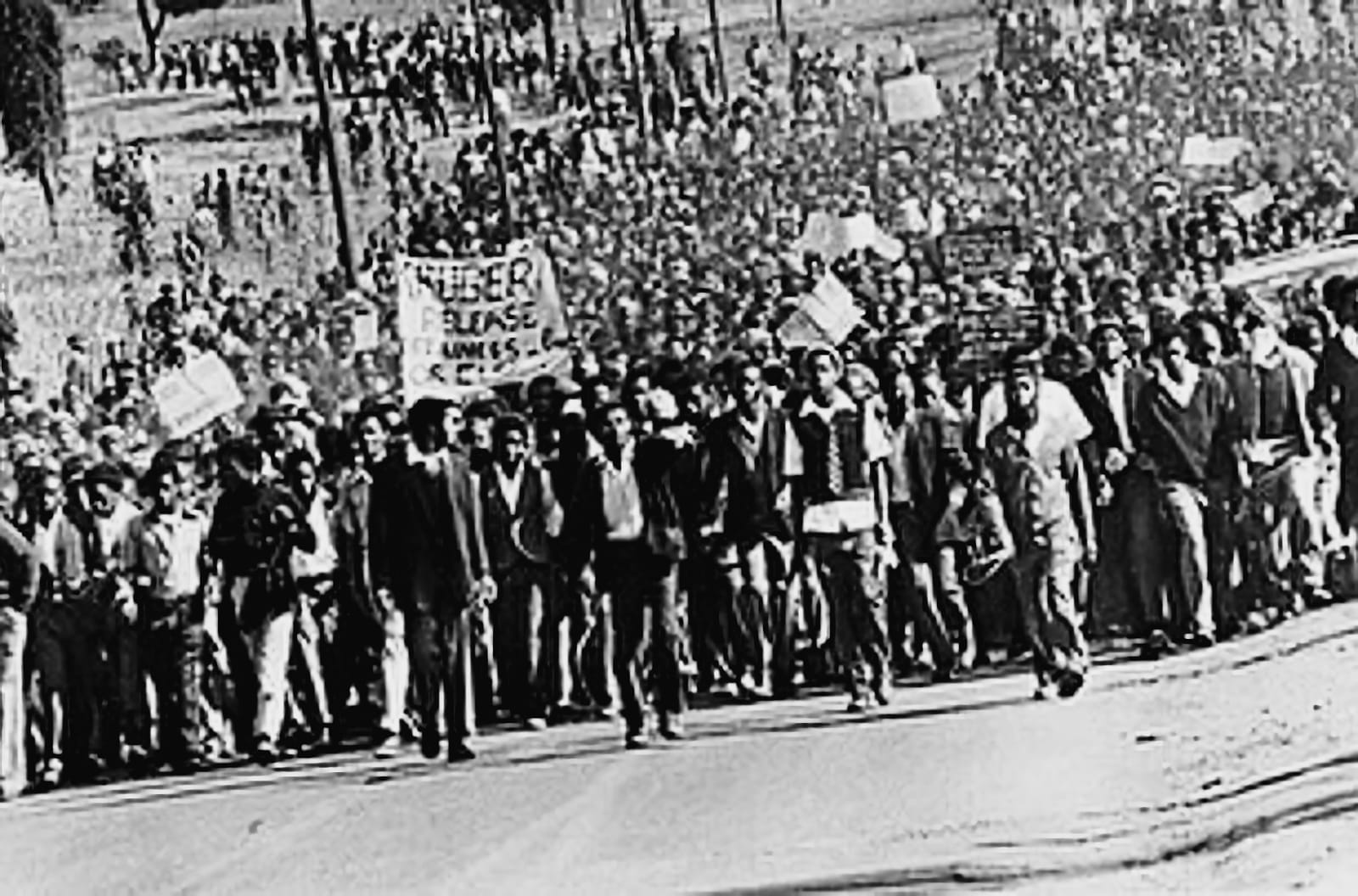
The angry students were real.
The ideological and geopolitical machinery that hijacked their anger and steered it toward a Marxist-Leninist revolution — that was a different agenda, and it's the part always left out of Youth Day discourse.
There is thus no policy of oppression here, but one of creating a situation which has never existed for the Bantu; namely, that, taking into consideration their languages, traditions, history and different national communities, they may pass through a development of their own.
Hendrik Verwoerd, former South African Prime Minister
About Jewish influence
Author Kevin MacDonald argues that Jewish overrepresentation in communist, 'left wing', and civil rights movements across centuries and continents is not coincidence or altruism, but an unconscious ethnic survival strategy.
 Jerm
Jerm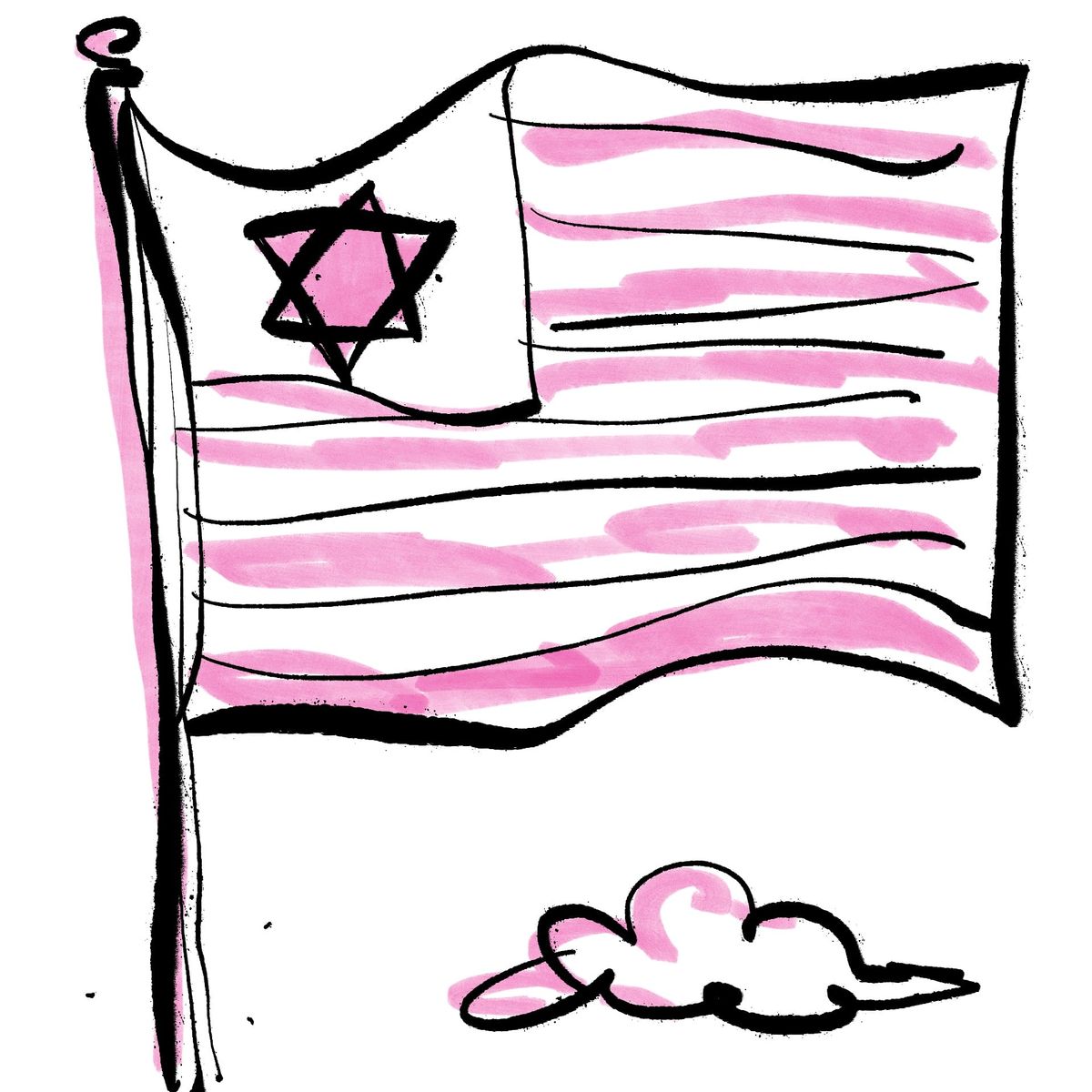
According to him, Jews have historically faced existential threat from homogeneous, ethnically confident majority populations, so weakening that majority's cohesion — through multiculturalism, mass immigration, universalism, and revolutionary politics — reduces the risk of the majority organising against them.
It makes sense when you think of it like that.
Ironically, none of that applies to Israel.
In South Africa, breaking Afrikaner nationalism was paramount to Jewish and Soviet interests.
To be clear, nothing said here is either offensive or 'antisemitic'. It's straightforward history, albeit slightly uncomfortable in some circles.
🎙️ Podcast episode
Simon Roche, spokesman for Die Suidlanders, gave a politically incorrect breakdown of everything, with some extra, more nuanced bits on former South African Prime Minister Hendrik Verwoerd.
This conversation is available on most podcast apps. If you use Apple Podcasts, upgrade to the paid subscription to remove the ads.
 Jerm
Jerm
Better yet, listen to it on my premium podcast, which has additional exclusive content.
Both Bantu and European must, therefore, consider in good time how this misery can be averted from themselves and from their descendants. They must find a plan to provide the two population groups with opportunities for the full development of their respective powers and ambitions without coming into conflict.
— Hendrik Verwoerd, former South African Prime Minister


